
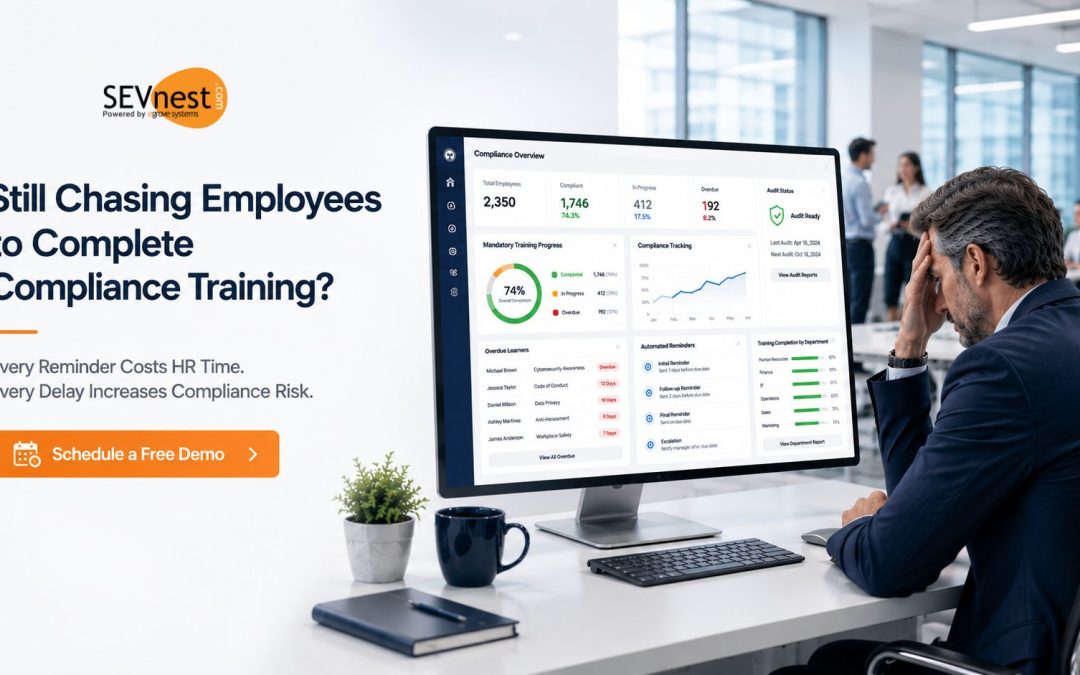
Completing mandatory compliance training should be one of the simplest tasks for an HR team. However, for many organizations, it often turns into a recurring cycle of reminder emails, manager follow-ups, and last-minute reports.
As businesses grow, so does the complexity of managing compliance.
New staff members join every week, regulations change, certifications expire, and employees work across various departments and locations. Without a structured system, HR teams end up spending more time on tracking training completion than on driving meaningful workforce initiatives.
The challenge is not just about getting employees to finish training.
It’s about creating a process where compliance becomes a natural part of employees’ workflows, without relying on manual reminders or repeated follow-ups.
Achieving compliance without chasing employees requires a shift from reactive administration to proactive compliance management.
By using automation, role-based learning, intelligent notifications, and real-time visibility, organizations can improve completion rates, reduce administrative work, and ensure they are audit-ready, while giving HR more time to focus on strategic priorities.
Why Employees Don’t Complete Mandatory Training
Many organizations assume employees ignore compliance training because they don’t see its value.
In reality, the reasons are often more practical.
Common barriers include:
Information Overload
Employees receive dozens of emails each day.
Compliance reminders compete with project updates, customer messages, and internal announcements, making them easy to overlook.
Competing Priorities
Most employees prioritize urgent work over mandatory training, especially during busy periods.
Training gets postponed until it becomes overdue.
Poor Learning Experience
If accessing training requires multiple logins, outdated systems, or confusing navigation, employees are less likely to complete it promptly.
Lack of Clear Prioritization
When every training course appears equally important, employees may struggle to determine what requires immediate attention.
Limited Manager Accountability
Managers often don’t have real-time visibility into their team’s learning progress.
Without timely insights, follow-ups happen too late.
These challenges highlight that improving employee training completion requires more than just frequent reminder emails.
It requires a learning experience that naturally fits into employees’ daily workflows.
Why Manual Follow-Ups Don’t Scale
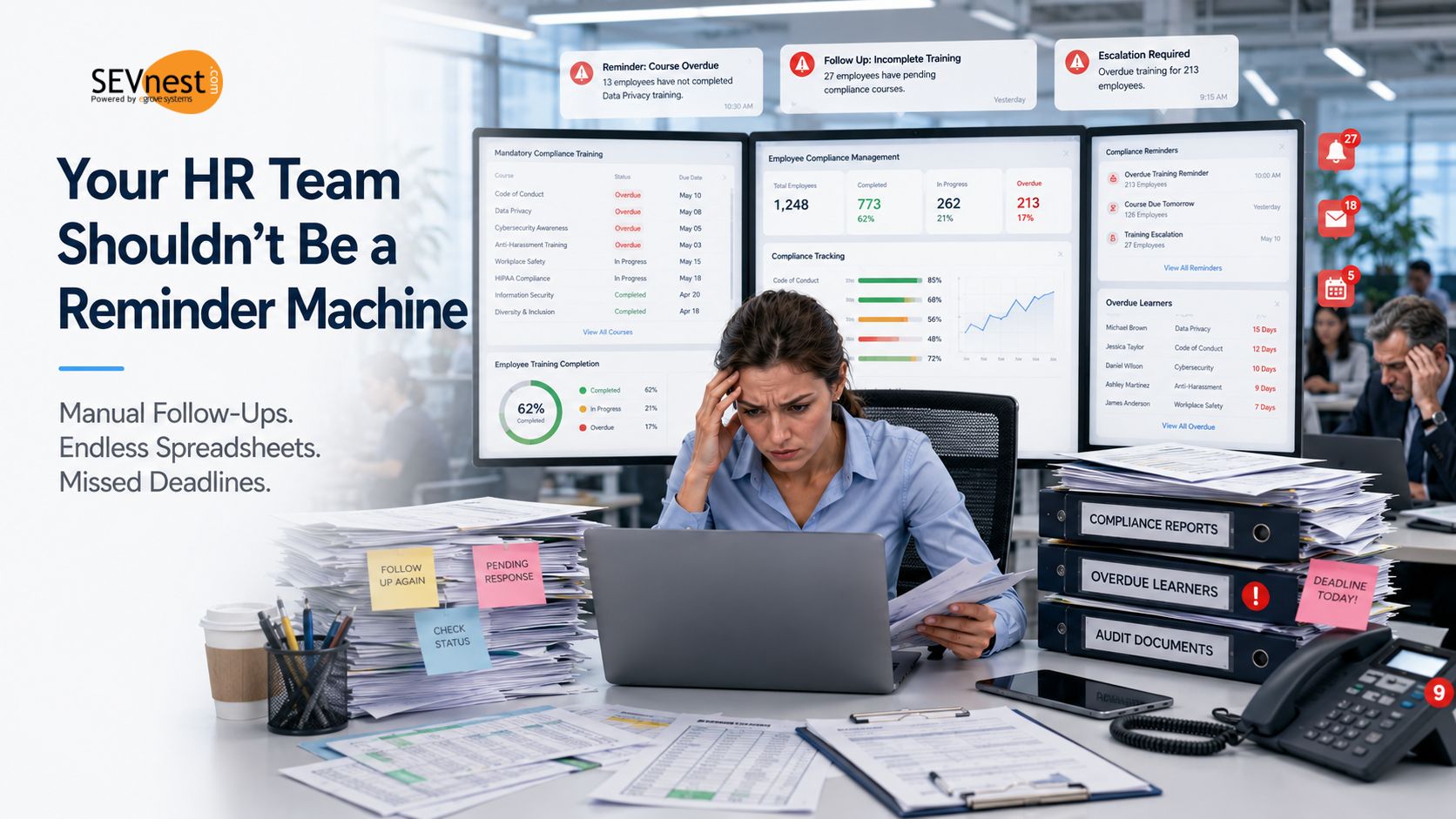
Many HR departments still manage compliance using a combination of:
- Excel spreadsheets
- Calendar reminders
- Email follow-ups
- Phone calls
- Manager escalations
- Manual reporting
These methods may work for a small workforce, but they become increasingly inefficient as organizations expand across locations, departments, or business units.
Manual processes create several challenges:
- Duplicate data entry
- Human errors in reporting
- Delayed visibility into completion rates
- Difficulty tracking certifications and renewals
- Inconsistent communication across teams
Instead of focusing on employee development or organizational growth, HR professionals become administrators of reminder emails.
Modern organizations need systems that reduce repetitive work while improving compliance outcomes.
What a Smarter Compliance Strategy Looks Like
Organizations that successfully achieve compliance without chasing employees focus on creating an efficient, employee-friendly compliance process rather than relying on manual intervention.
A smarter strategy includes:
Automated Enrollment
Employees are automatically assigned relevant courses based on their department, role, location, or regulatory requirements, eliminating manual course allocation.
Role-Based Learning
Different roles require different compliance training.
Personalized learning paths ensure employees receive only the training relevant to their responsibilities.
Intelligent Reminders
Instead of generic email blasts, automated reminders are delivered at appropriate intervals, helping employees complete training before deadlines without overwhelming their inboxes.
Real-Time Progress Dashboards
HR leaders gain instant visibility into:
- Course completion rates
- Overdue learners
- Department-wise progress
- Upcoming certification renewals
- Compliance trends
This enables proactive intervention instead of reactive follow-ups.
Mobile Accessibility
Today’s workforce expects flexibility.
Mobile-friendly learning allows employees to complete mandatory compliance training from anywhere, improving participation rates.
Automated Certifications
Once training is completed, certificates are generated automatically and stored securely, reducing manual record-keeping and simplifying audits.
Audit-Ready Reporting
Compliance reporting should take minutes, not days.
Automated reports provide accurate records whenever regulators, auditors, or management request evidence.
A modern learning management system transforms compliance from a reactive process into a structured, continuous workflow.
How HR Can Focus on Strategic Work
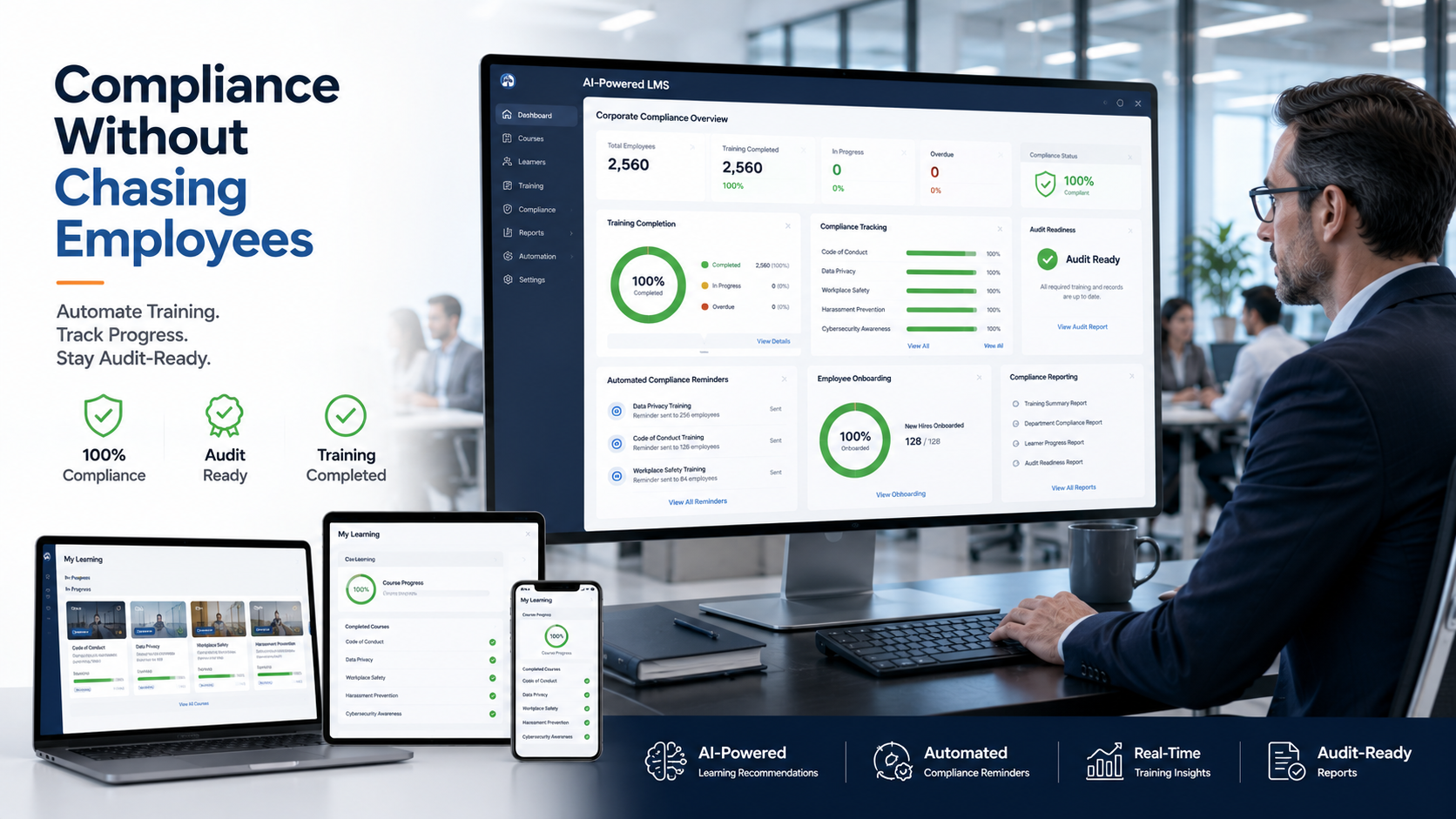
Reducing manual follow-ups allows HR professionals to contribute where they create the greatest value.
Instead of spending hours tracking overdue learners, HR teams can focus on:
- Building employee engagement initiatives
- Developing leadership programs
- Improving onboarding experiences
- Supporting workforce planning
- Driving talent development
- Creating continuous learning cultures
This shift strengthens HR’s role as a strategic business partner rather than an administrative function.
Building a Culture of Compliance Instead of Compliance Through Pressure
Sustainable compliance isn’t achieved through repeated reminders; it’s built through shared responsibility.
Organizations with strong compliance cultures typically:
- Encourage employees to take ownership of their learning.
- Give managers visibility into team progress.
- Integrate compliance into employee onboarding.
- Celebrate learning milestones and achievements.
- Make learning accessible and convenient.
- Treat compliance as an ongoing process rather than an annual event.
When compliance becomes part of everyday work, employees are more likely to complete training without external pressure.
Common Mistakes Organizations Make
Many organizations unintentionally create compliance challenges by relying on outdated practices.
Common mistakes include:
- Treating compliance as a once-a-year activity.
- Depending solely on reminder emails.
- Maintaining manual spreadsheets for tracking.
- Using one-size-fits-all training programs.
- Lacking executive and manager involvement.
- Waiting until audit season to review compliance records.
Avoiding these mistakes improves both employee participation and organizational readiness.
How AI Is Changing Compliance Management
Artificial Intelligence is helping HR teams make compliance management more efficient—not by replacing HR professionals, but by reducing repetitive work and providing better insights.
AI-powered learning platforms can help organizations:
- Identify learners who are likely to miss deadlines based on engagement patterns.
- Recommend relevant learning based on employee roles or previous training.
- Highlight compliance gaps across departments or locations.
- Personalize learning journeys for different employee groups.
- Surface actionable insights through dashboards and analytics.
- Reduce administrative effort by automating routine workflows.
These capabilities help HR teams make informed decisions while keeping compliance programs proactive rather than reactive.
How SEVnest Supports Smarter Compliance
Modern compliance requires more than a repository of training courses.
It requires a platform that simplifies administration while improving learner engagement.
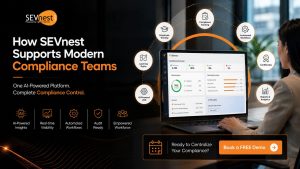
SEVnest is an AI-powered compliance training and workforce learning platform designed to help organizations modernize their compliance strategy.
With SEVnest, organizations can:
- Automate employee enrollment based on roles and departments.
- Deliver role-specific corporate compliance training.
- Send intelligent compliance reminders automatically.
- Monitor learner progress in real time.
- Generate audit-ready compliance reports.
- Manage employee onboarding and recurring certifications.
- Support compliance programs across.
Final Thoughts
HR professionals play a vital role in building safe, ethical, and compliant workplaces. Yet too much of their time is often spent sending reminder emails, updating spreadsheets, and following up on overdue training.
Achieving compliance without chasing employees is possible when organizations replace manual processes with smarter strategies. Automated workflows, role-based learning, real-time reporting, and AI-powered insights help improve employee training completion while reducing administrative effort.
By embracing a modern compliance approach, organizations can create a culture of accountability, strengthen workforce learning, and remain audit-ready with greater confidence.
If your organization is looking to simplify employee compliance management, improve training completion, and reduce manual follow-ups, SEVnest provides an AI-powered platform that helps HR teams manage compliance more efficiently while enabling continuous workforce learning.
Book a Free Demo now: https://www.sevnest.com/contact-us/