
The Growing Complexity of Compliance Management
A typical compliance team today may start the day by checking employee training completion in one system, reviewing certification records in another, collecting audit documents from shared folders, and updating compliance reports manually.
While each tool may solve a specific problem, managing compliance across multiple platforms creates a new challenge: keeping everything connected, accurate, and visible.
As organizations grow, compliance responsibilities become more complex. HR teams manage mandatory compliance training, employee certifications, policy acknowledgements, onboarding requirements, and regulatory reporting across different systems. Without a centralized approach, teams often spend more time managing tools than improving compliance outcomes.
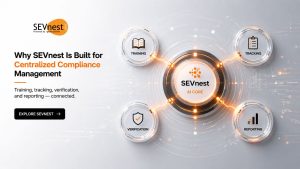
This is why many organizations are exploring an AI Compliance Management Platform to bring learning, tracking, verification, reporting, and workforce insights together in one place.
A unified approach helps compliance teams reduce administrative effort, improve visibility, and build a more proactive compliance process.
Why Compliance Technology Became Fragmented
Compliance technology did not become fragmented overnight. Organizations typically adopted different solutions as new business needs emerged.
For example:
- A company implemented a learning management system for employee training.
- HR added separate HR compliance tools for tracking requirements.
- Compliance teams introduced certification management systems.
- Operations teams created spreadsheets for reporting and monitoring.
- Audit teams used separate documentation tools.
Each solution addressed a specific requirement. However, over time, organizations ended up with multiple platforms that were not designed to work together.
Common compliance systems now include:
- Corporate compliance training platforms
- Employee certification tools
- Compliance tracking software
- Reporting dashboards
- Policy management systems
- Employee onboarding solutions
Although these tools provide value individually, managing them together creates operational challenges.
Modern organizations are now shifting toward integrated enterprise compliance software that connects these processes through a centralized platform.
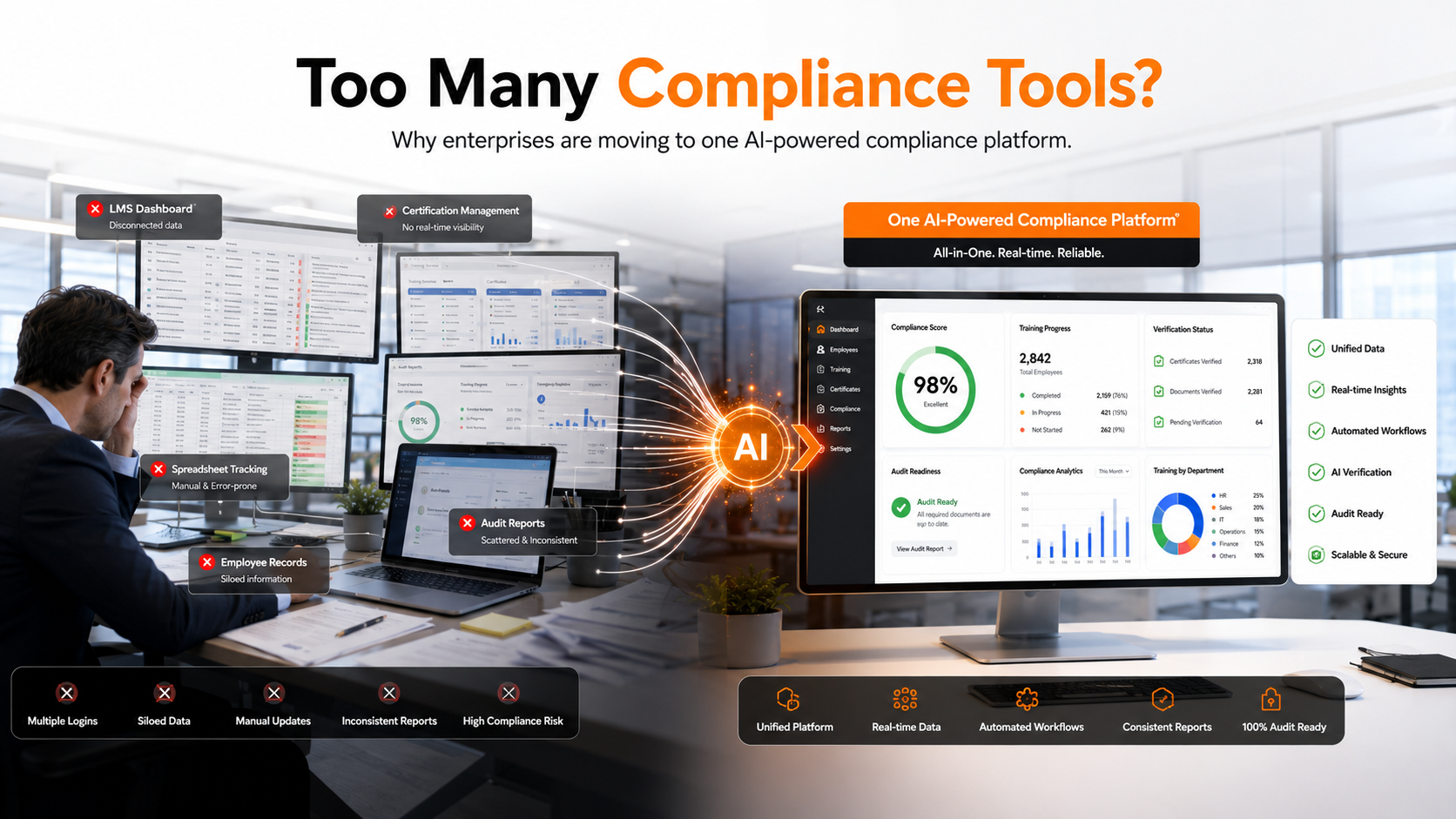
Problems with Managing Compliance Across Multiple Systems
1. Data Silos Reduce Compliance Visibility
When employee compliance data exists across multiple systems, teams may not have a complete view of workforce readiness.
For example, an employee may complete a cybersecurity course in one system, renew a certification in another, and acknowledge policies through a separate platform.
Without connected data, compliance leaders struggle to answer important questions:
- Who has completed required training?
- Which employees need follow-up?
- Which certifications are expiring?
- Where are compliance risks increasing?
A centralized AI Compliance Management Platform helps organizations create a single source of compliance information.
2. Duplicate Administrative Work
Many HR and compliance teams spend significant time transferring information between systems.
Common manual tasks include:
- Exporting reports
- Updating spreadsheets
- Sending reminders
- Checking completion status
- Preparing audit documentation
This administrative burden limits the time teams can spend on strategic compliance improvement.
3. Manual Reporting Creates Delays
Compliance reporting often requires collecting information from different sources before audits or leadership reviews.
Disconnected systems can make reporting:
- Time-consuming
- Difficult to validate
- Dependent on manual processes
Modern compliance teams are adopting compliance automation to generate faster insights and improve reporting accuracy.
4. Increased Audit Risk
Audits require accurate documentation and clear evidence of compliance activities.
When information is scattered across multiple systems, organizations may face challenges proving:
- Employee training completion
- Certification status
- Policy acknowledgement
- Compliance progress
A unified compliance platform improves audit readiness by maintaining organized, accessible compliance records.
What Is an AI Compliance Management Platform?
An AI Compliance Management Platform is a technology solution that combines compliance learning, tracking, verification, reporting, and analytics into one intelligent system.
Unlike traditional tools that only record completion, AI-powered platforms help organizations understand compliance progress and identify potential risks.
A modern platform can support:
- Employee compliance management
- Training assignments
- Learning progress tracking
- Automated reminders
- Compliance dashboards
- Reporting automation
- Workforce insights
The goal is not simply to store compliance information. The goal is to help organizations make better compliance decisions.
Why Organizations Are Consolidating Their Compliance Stack
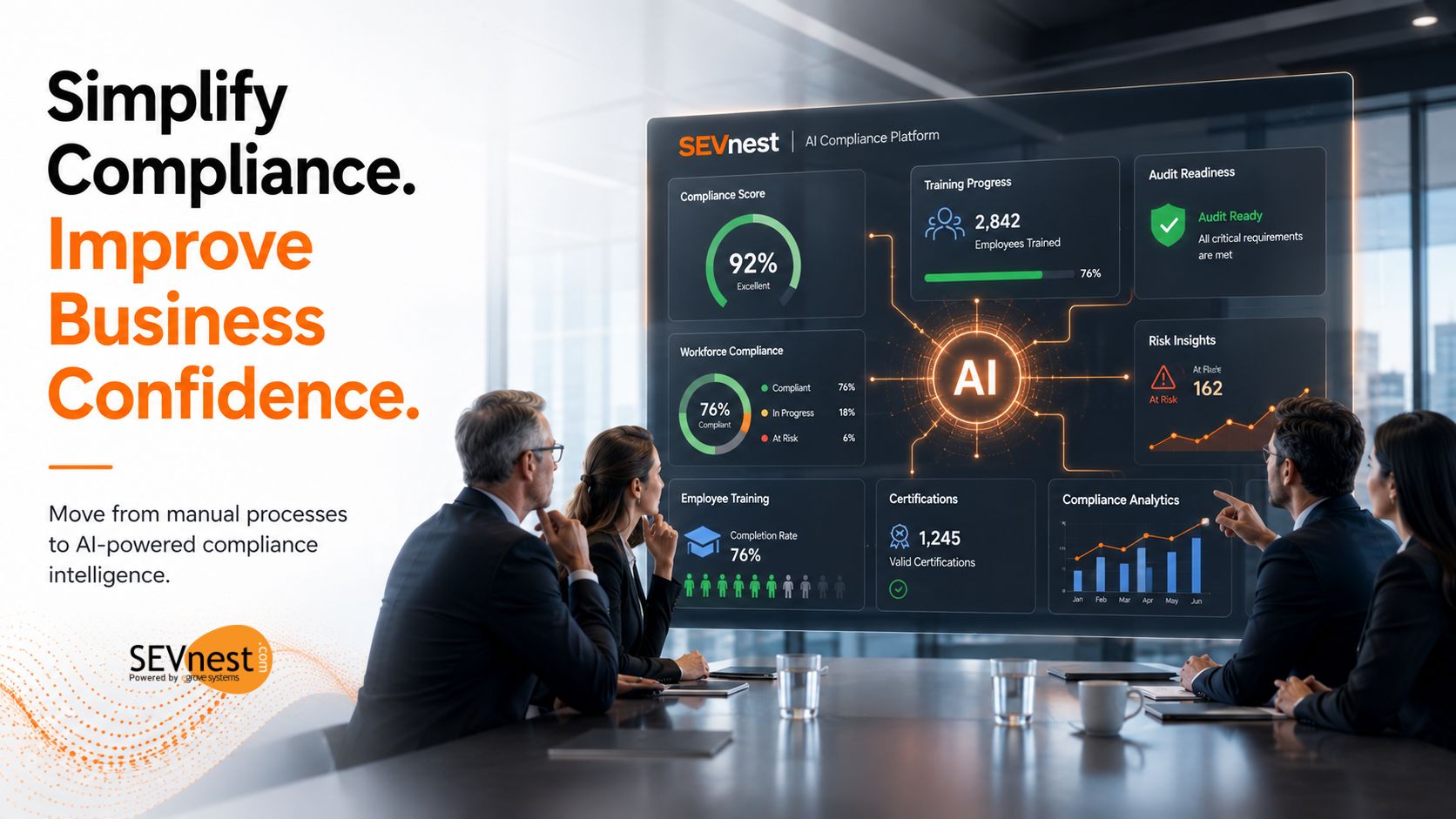
Organizations are moving from multiple disconnected tools toward centralized compliance technology because they need greater efficiency and visibility.
Key benefits include:
Centralized Compliance Data
A unified platform provides one place to manage employee learning, certifications, compliance activities, and reporting.
Automated Workflows
Automation reduces repetitive tasks such as:
- Training reminders
- Completion tracking
- Report generation
- Compliance follow-ups
Improved Compliance Visibility
Leaders can quickly understand workforce compliance status through dashboards and analytics.
Better Collaboration
HR, compliance, operations, and leadership teams can access consistent information.
Reduced Administrative Work
Automation allows teams to focus on improving compliance programs instead of managing spreadsheets and systems.
Key AI Capabilities Modern Compliance Teams Need
AI is changing how organizations manage compliance operations. Modern teams increasingly look for platforms that provide intelligent automation and insights.
Automated Compliance Reminders
AI-powered systems can help employees stay on track with required learning activities through automated notifications.
Personalized Learning Recommendations
AI can help recommend relevant learning paths based on employee roles, responsibilities, and compliance requirements.
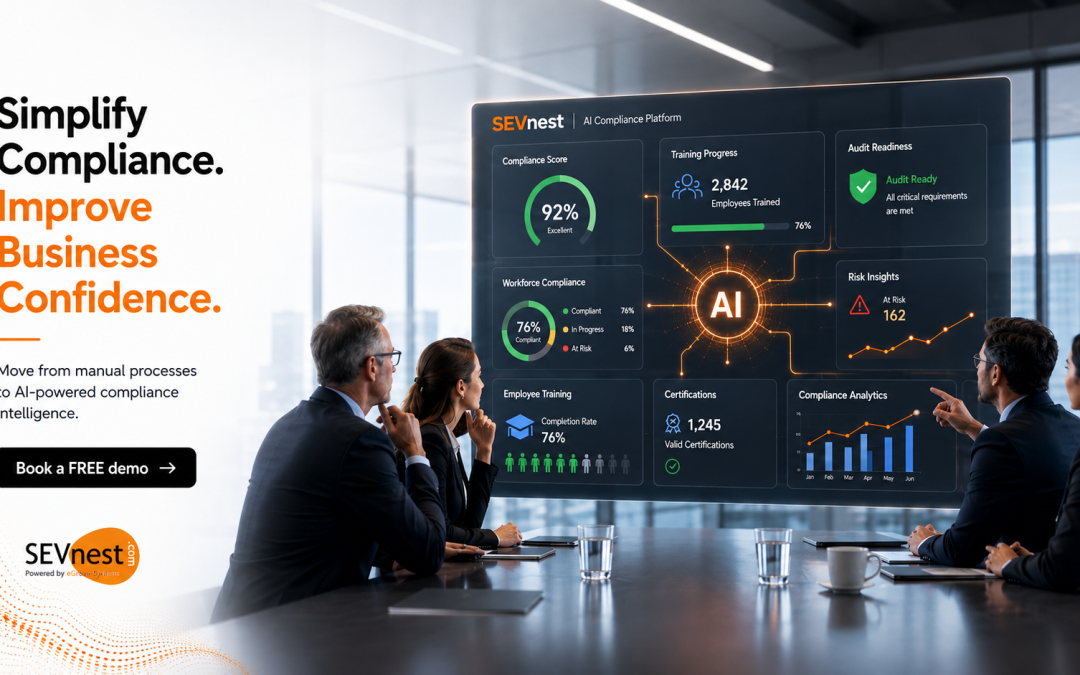
Compliance Dashboards
Real-time dashboards provide visibility into:
- Completion rates
- Compliance status
- Workforce readiness
- Risk areas
Predictive Insights
AI can identify patterns that may indicate future compliance risks and help teams take proactive action.
Role-Based Learning
Different employees have different compliance requirements. AI-powered platforms can support personalized learning experiences.
Reporting Automation
Automated reporting reduces manual preparation and provides faster access to compliance information.
Signs Your Organization Has Outgrown Multiple Compliance Tools
Your organization may need a consolidated compliance platform if you experience:
1. Teams Spend Too Much Time Collecting Reports
If employees manually gather compliance data from different systems, your process may be inefficient.
2. Leadership Lacks Real-Time Visibility
If executives cannot quickly understand compliance status, decision-making becomes difficult.
3. Employees Receive Too Many Reminders
Frequent manual follow-ups indicate the need for better workflow automation.
4. Audit Preparation Requires Significant Effort
If audits require weeks of preparation, disconnected systems may be slowing your organization.
5. Compliance Data Exists Everywhere
Multiple spreadsheets, platforms, and reports often indicate the need for consolidation.
The Future of AI in Compliance Management
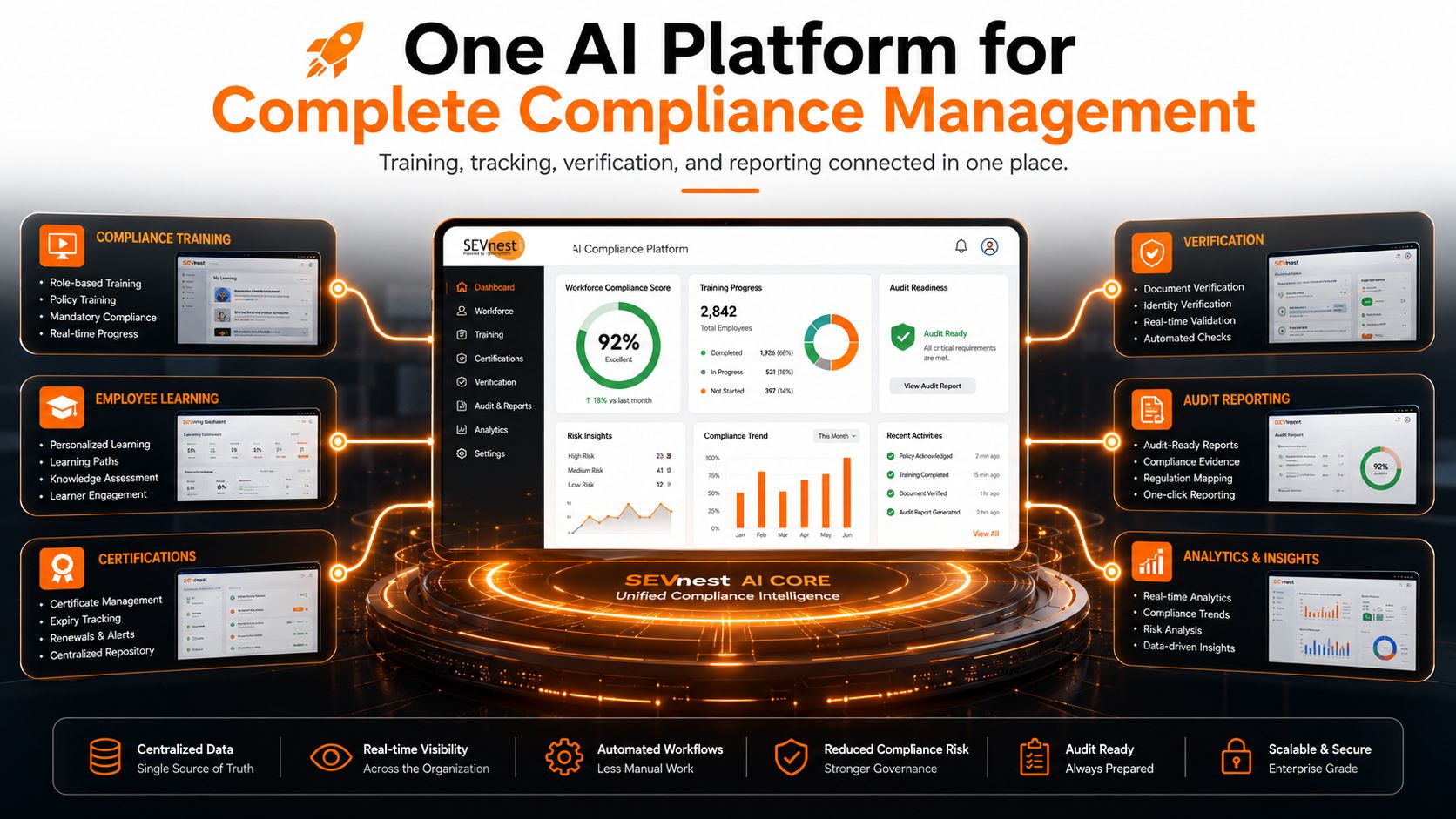
The future of compliance is moving toward proactive, intelligent, and automated management.
Organizations will increasingly adopt AI-powered platforms that help them:
- Predict compliance risks
- Automate administrative workflows
- Personalize workforce learning
- Improve employee accountability
- Generate real-time compliance insights
Instead of reacting to compliance issues after they occur, businesses will use AI to identify opportunities for improvement earlier.
The next generation of compliance management will focus on visibility, automation, and continuous improvement.
How SEVnest Supports Modern Compliance Teams
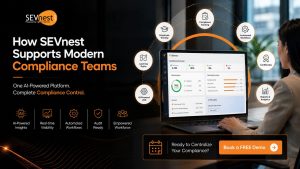
SEVnest helps organizations simplify compliance management by bringing essential workforce learning and compliance processes into one AI-powered platform.
With SEVnest, organizations can manage:
- Corporate compliance training
- Employee learning workflows
- Compliance tracking
- Verification processes
- Compliance reporting
- Workforce insights
By reducing dependence on multiple disconnected systems, SEVnest helps teams improve visibility, streamline compliance workflows, and support a more organized approach to workforce readiness.
The platform enables organizations to move from managing separate compliance tools toward a centralized compliance management approach.
Conclusion: The Future of Compliance Is Consolidation
Modern compliance teams do not need more disconnected tools. They need better visibility, automation, and control.
An AI Compliance Management Platform helps organizations combine workforce learning, compliance tracking, verification, and reporting into one intelligent ecosystem.
As compliance requirements continue to evolve, businesses that simplify their technology stack will be better positioned to manage risk, improve efficiency, and maintain audit readiness.
The future of compliance is not adding more systems it is creating a smarter, more connected compliance operation.
Book your Free Demo: https://www.sevnest.com/contact-us/