
Choosing a workplace compliance training platform can be challenging for organizations managing growing teams, multiple departments, and changing compliance requirements.
Many HR and compliance teams begin their search after experiencing common challenges:
- Training managed through spreadsheets
- Manual employee reminders
- Difficulty tracking completion
- Limited reporting visibility
- Multiple disconnected learning systems
Today, organizations need more than a platform that simply delivers courses. They need a solution that helps manage learning, improve visibility, automate workflows, and support a more structured compliance process.
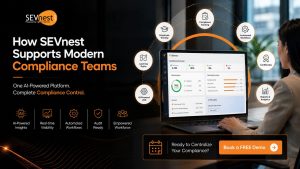
SEVnest is an AI-powered workforce learning and compliance platform designed to help organizations centralize training management, monitor employee progress, streamline workflows, and improve visibility across workforce learning activities.
But before selecting any platform, the most important question is:
What should organizations actually evaluate when choosing a workplace compliance training platform?
The right solution is not always the one with the most features. It is the one that solves your organization’s real challenges.
Start With the Problems You Need to Solve
Before comparing platforms, organizations should first understand what they need to improve.
A common mistake is choosing software based only on feature lists without identifying the actual business problem.
Start by asking:
- Are employees missing required training deadlines?
- Are administrators spending too much time sending reminders?
- Is training data stored across multiple systems?
- Can managers easily see completion status?
- Is reporting difficult during reviews?
- Does your current system support workforce growth?
Understanding these challenges helps organizations evaluate platforms based on business needs rather than technology alone.
A good workplace compliance training platform should reduce operational complexity and make compliance learning easier to manage.
What Should You Look for in a Workplace Compliance Training Platform?
1. Centralized Training Management
A strong platform should allow organizations to manage compliance learning from one centralized environment.
Look for capabilities such as:
- Course assignments
- Training management
- Employee learning records
- Learning paths
- Progress visibility
A centralized system reduces the need to manage training information across spreadsheets, emails, and disconnected tools.
For HR and L&D teams, this creates a clearer view of workforce learning activities.
2. Automation That Reduces Manual Work
Compliance training often requires repetitive administrative tasks.
A modern platform should help automate activities such as:
- Training assignments
- Employee notifications
- Reminder workflows
- Recurring learning activities
Automation allows HR and compliance teams to spend less time managing follow-ups and more time improving employee learning experiences.
When evaluating a compliance training platform, ask:
How much manual work can this platform realistically reduce?
3. Role-Based Learning Capabilities
Not every employee requires the same learning experience.
A useful platform should support training based on:
- Job role
- Department
- Location
- Responsibilities
- Compliance requirements
Role-based learning helps employees receive more relevant training instead of unnecessary content.
This improves both employee experience and training effectiveness.
4. Training Tracking and Visibility
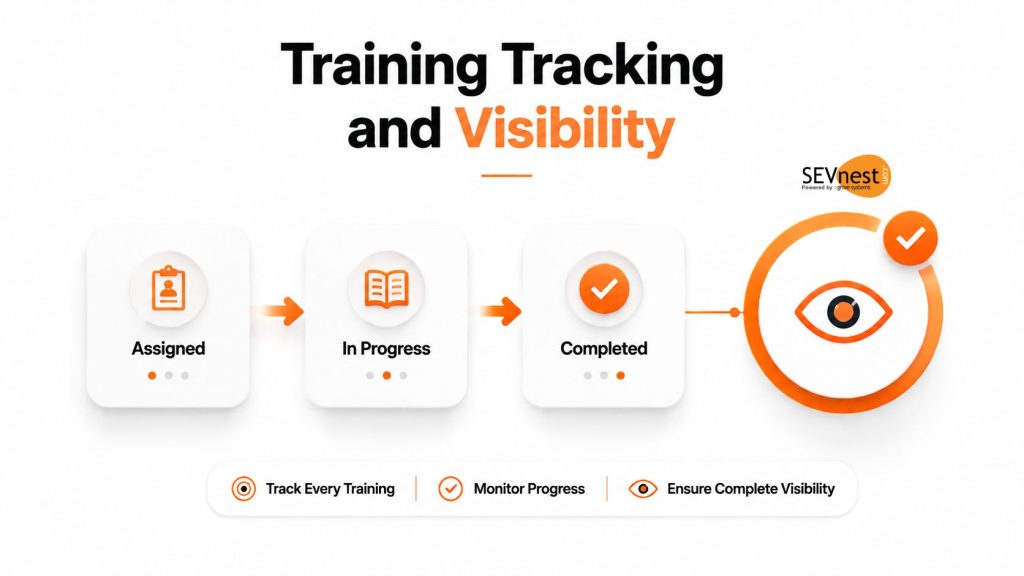
A platform should provide clear visibility into workforce learning progress.
Administrators should easily understand:
- Completed training
- Pending assignments
- Overdue courses
- Employee progress
- Learning history
Strong tracking capabilities help organizations understand whether training programs are reaching employees effectively.
A reliable compliance training platform should make important information easy to access.
5. Reporting Capabilities
Reporting is one of the most important evaluation factors.
Organizations should consider whether the platform can answer questions like:
- Who completed required training?
- Which employees need follow-up?
- What training is overdue?
- How is learning progress changing?
Useful reporting helps HR and compliance teams make better decisions.
A platform should provide practical insights, not just store training records.
6. Employee Experience
A compliance platform is only effective when employees can use it easily.
Evaluate:
- Navigation simplicity
- Mobile accessibility
- Course experience
- Progress visibility
- Learning engagement
A complicated system can reduce employee participation and create additional support requirements.
The best solutions balance administrative control with a simple employee experience.
7. AI Capabilities
AI should provide practical value, not just be a marketing feature.
When evaluating AI functionality, ask:
What does AI actually improve?
Useful applications may include:
- Personalized learning recommendations
- Content discovery
- Learning insights
- Training recommendations
- Workflow assistance
An AI-enabled platform should help organizations create more efficient learning experiences while supporting better decision-making.
8. Scalability
Organizations change over time.
The platform you choose should support:
- Growing employee numbers
- New departments
- Additional training programs
- Changing learning requirements
A solution that works today should also support future workforce needs.
How SEVnest Aligns With Modern Compliance Needs
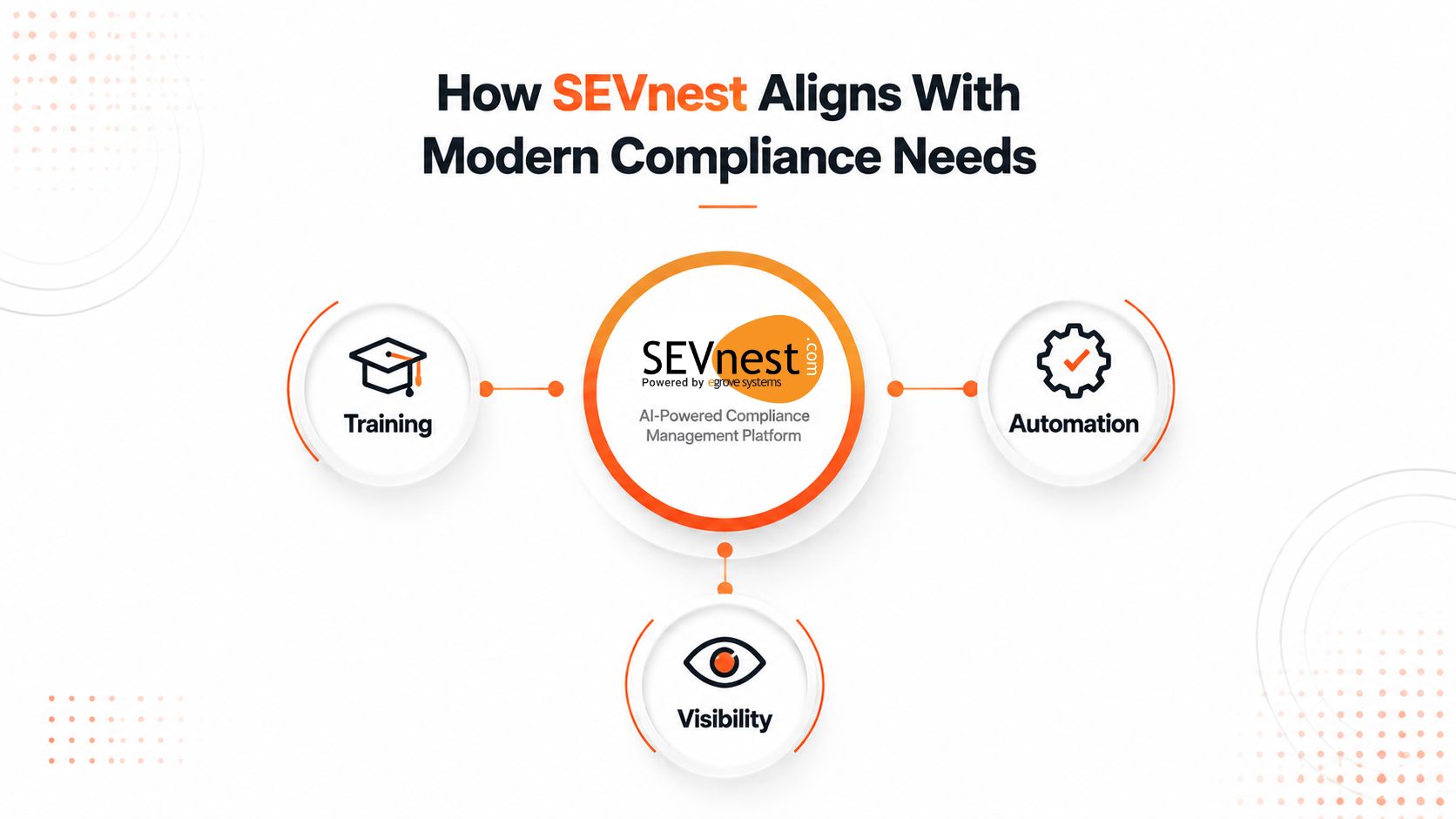
For organizations looking to create a more centralized approach to workforce learning and compliance management, SEVnest is a platform worth evaluating.
SEVnest helps organizations bring compliance training and workforce learning activities into a more structured environment.
The platform supports areas such as:
Compliance Training
Organizations can manage structured learning activities and provide employees with relevant compliance education.
Business value:
More organized training management and improved visibility into workforce learning.
Workforce Learning
SEVnest supports broader employee learning management beyond individual training assignments.
Business value:
Organizations can create a more connected learning experience.
Automation
Automated workflows help reduce repetitive administrative activities related to training management.
Business value:
Less manual follow-up and improved process efficiency.
Training Visibility
Organizations can gain better insight into employee learning progress and training activities.
Business value:
HR and compliance teams can make more informed decisions.
Certifications and Reporting
Tracking important learning-related records and reporting information helps organizations maintain better visibility.
Business value:
Easier access to workforce learning information.
AI-Powered Learning
SEVnest uses AI-powered learning capabilities to support a more intelligent workforce learning experience.
Business value:
Organizations can explore more personalized and efficient learning approaches.
How to Compare Compliance Training Platforms
Instead of comparing platforms only by features, compare them by outcomes.
| Business Challenge | Platform Capability | Desired Outcome |
| Manual reminders | Automation | Less administrative work |
| Scattered records | Centralized management | Better visibility |
| Employee confusion | Role-based learning | More relevant training |
| Limited reporting | Analytics | Faster decision-making |
| Growing workforce | Scalability | Long-term usability |
The best platform is the one that solves your organization’s operational challenges.
Questions to Ask Before Choosing a Platform
Before selecting a workplace compliance training platform, ask:
- Can we create role-based learning paths?
- Can training assignments be automated?
- How easily can we track overdue training?
- What reporting capabilities are available?
- Can the platform support employee onboarding?
- How does AI improve the learning experience?
- Can the platform scale with workforce growth?
- What support is available during implementation?
These questions help organizations evaluate whether a solution fits their long-term needs.
Red Flags to Watch For
Organizations should be careful when evaluating platforms that:
- Offer many features but poor usability
- Require heavy manual administration
- Have limited reporting capabilities
- Provide unclear AI functionality
- Create a poor employee experience
- Are difficult to scale
- Lack implementation support
A platform should simplify compliance management, not create additional complexity.
Is SEVnest the Right Fit for Your Organization?
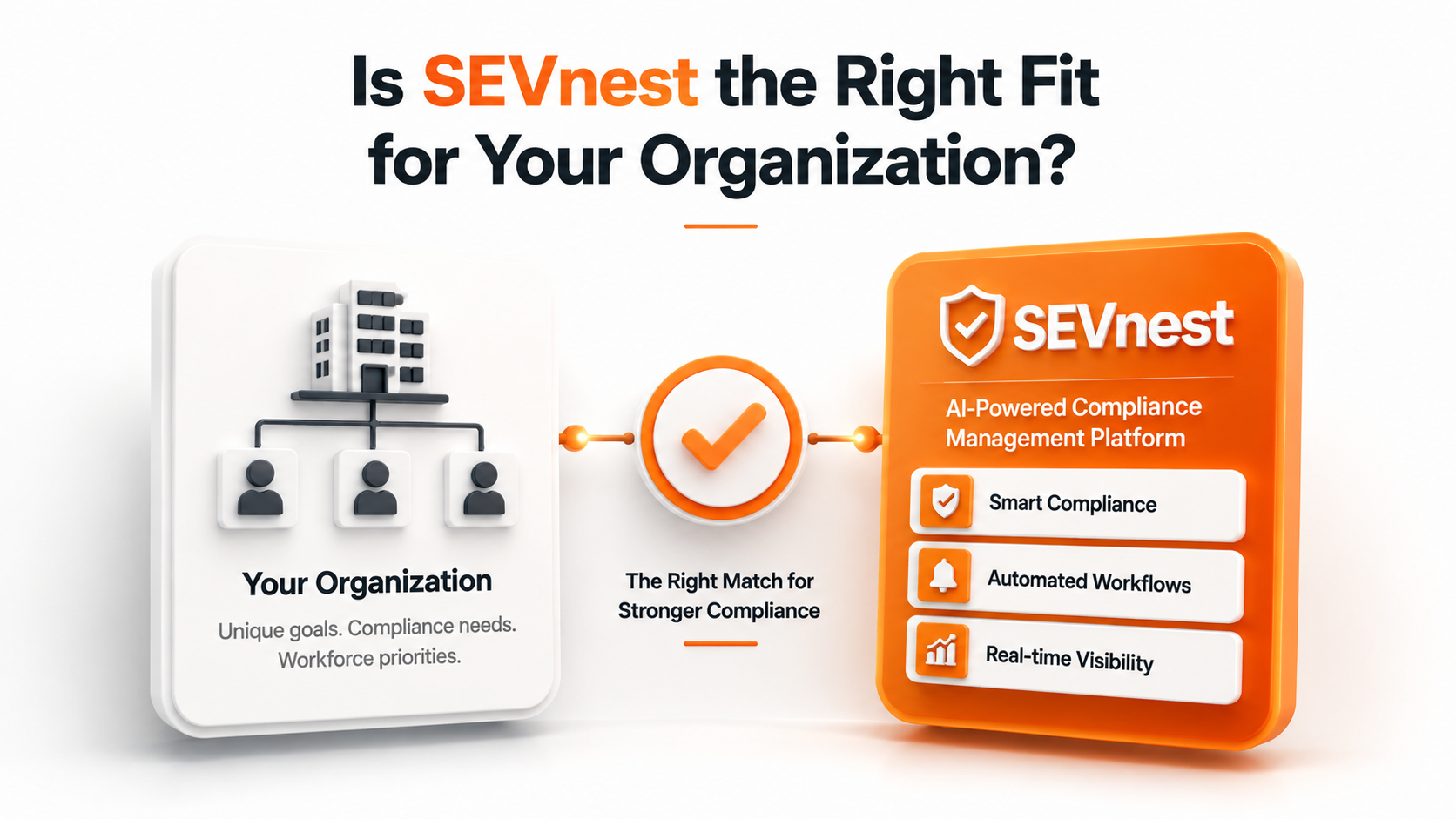
SEVnest may be worth evaluating if your organization:
- Manages compliance training across multiple teams
- Needs better training visibility
- Wants to reduce manual administration
- Requires structured workforce learning
- Is exploring AI-powered learning solutions
- Needs a more centralized approach to compliance training
The right platform depends on your organization’s goals, processes, and workforce requirements.
Ready to Simplify Workplace Compliance Training?
Choosing the right platform is about finding a solution that improves visibility, reduces administrative effort, supports employees, and scales with your organization.
A modern workplace compliance training platform should help teams manage learning more efficiently while creating a better experience for administrators and employees.
See how SEVnest can help your organization manage compliance training and workforce learning in a smarter, more centralized way.