
Compliance management has become increasingly complex for modern enterprises. HR teams, compliance officers, and L&D leaders are often responsible for managing employee training, certifications, policy acknowledgements, audit documentation, and reporting across multiple systems.
Many organizations start by adding specialized tools to solve individual problems. One platform manages employee training, another tracks certifications, another creates reports, and spreadsheets often fill the gaps between systems.
Over time, this creates operational challenges.
Teams spend more time managing technology than improving compliance outcomes. Data becomes scattered, reporting becomes slower, and leaders struggle to get a complete view of workforce compliance.
This is why organizations are increasingly evaluating an AI Compliance Management Platform that combines learning, automation, tracking, reporting, and compliance insights into one centralized solution.
Why Organizations Are Replacing Multiple Compliance Tools
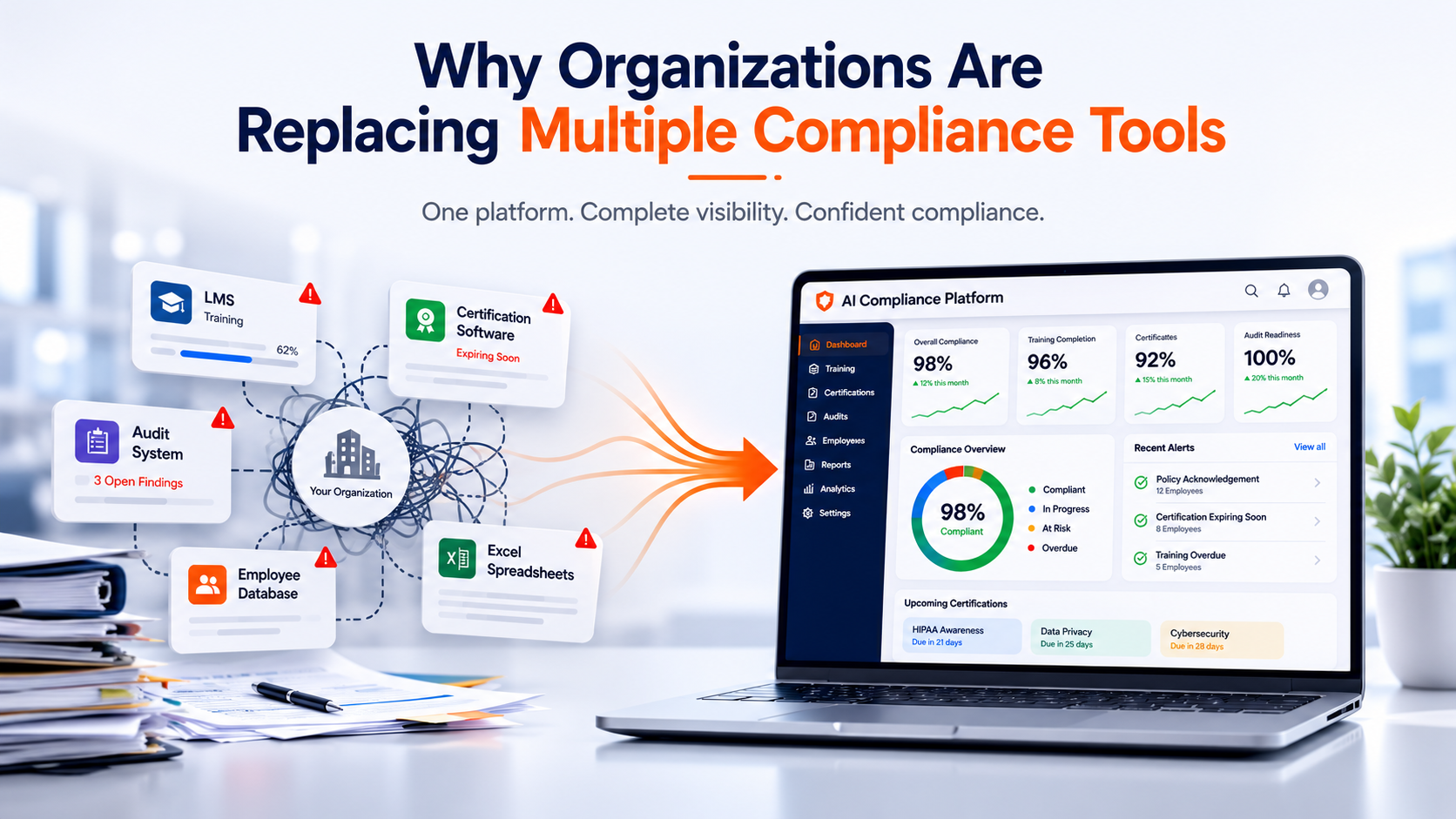
Organizations rarely choose multiple compliance tools intentionally. Most technology stacks grow gradually as business needs change.
A company may use:
- A learning management system for employee training
- Separate certification management software
- HR compliance tools for employee records
- Reporting systems for audits
- Spreadsheets for tracking exceptions
While each solution may provide value individually, the overall compliance process becomes fragmented.
Rising Software Costs
Managing multiple platforms increases technology expenses.
Organizations must consider:
- Multiple subscriptions
- Separate implementation costs
- Additional training requirements
- Maintenance and support expenses
A consolidated enterprise compliance platform can help organizations reduce complexity by bringing critical compliance processes together.
Manual Administration
Compliance teams often spend significant time performing repetitive tasks:
- Sending reminders
- Updating employee records
- Collecting reports
- Following up on incomplete training
- Preparing audit documentation
Without automation, compliance management becomes dependent on manual effort.
Modern compliance automation software helps reduce administrative workload by automating routine workflows.
Poor System Integration
When systems do not communicate effectively, compliance teams may struggle to maintain accurate information.
For example:
An employee may complete training in one system while certification data exists somewhere else. Without integration, teams may not have a complete picture of employee compliance status.
Limited Compliance Visibility
Leadership teams need clear answers:
- Are employees completing required training?
- Which teams have compliance gaps?
- What risks require attention?
- Are we prepared for audits?
Multiple systems often make these questions harder to answer.
What an AI Compliance Management Platform Should Include
Modern AI compliance software should provide more than basic training management.
The right platform should help organizations manage the complete compliance lifecycle.
Compliance Training Management
Organizations need tools to create, assign, and manage employee learning programs.
Important capabilities include:
- Mandatory compliance training
- Role-based learning assignments
- Employee progress tracking
- Learning completion monitoring
AI-Powered LMS Capabilities
An AI-powered LMS improves traditional learning management by adding intelligence and automation.
Key capabilities include:
- Personalized learning recommendations
- Automated reminders
- Learning progress insights
- Improved employee engagement
Compliance Workflow Automation
A strong compliance management system should automate repetitive processes.
Examples:
- Training assignment workflows
- Certification reminders
- Approval processes
- Compliance notifications
Automation allows teams to focus on strategic compliance improvements.
Dashboards and Compliance Reporting
Decision-makers need real-time visibility.
A modern compliance platform should provide:
- Compliance dashboards
- Workforce readiness insights
- Audit reports
- Employee status tracking
- Analytics
Effective compliance reporting software helps leaders make informed decisions faster.
Business Benefits of Consolidating Compliance Technology
Moving from multiple tools to one unified platform provides several advantages.
Lower Operational Costs
A consolidated platform reduces the need to manage multiple systems, vendors, and processes.
Organizations can simplify technology management while improving efficiency.
Faster Employee Onboarding
A unified workforce learning platform helps new employees complete required learning faster.
HR teams can:
- Assign training automatically
- Track progress
- Identify completion gaps
Better Compliance Visibility
Centralized compliance data allows leaders to understand workforce readiness more effectively.
Instead of reviewing multiple reports, teams can access one complete compliance view.
Reduced HR Workload
Automation reduces manual activities such as:
- Follow-ups
- Tracking
- Reporting
- Data collection
This allows HR and compliance teams to focus on higher-value initiatives.
Improved Audit Readiness
Audit preparation becomes easier when compliance records are organized and accessible.
A centralized system helps maintain:
- Training evidence
- Employee records
- Compliance reports
- Certification information
Buyer’s Evaluation Checklist for Choosing Compliance Software
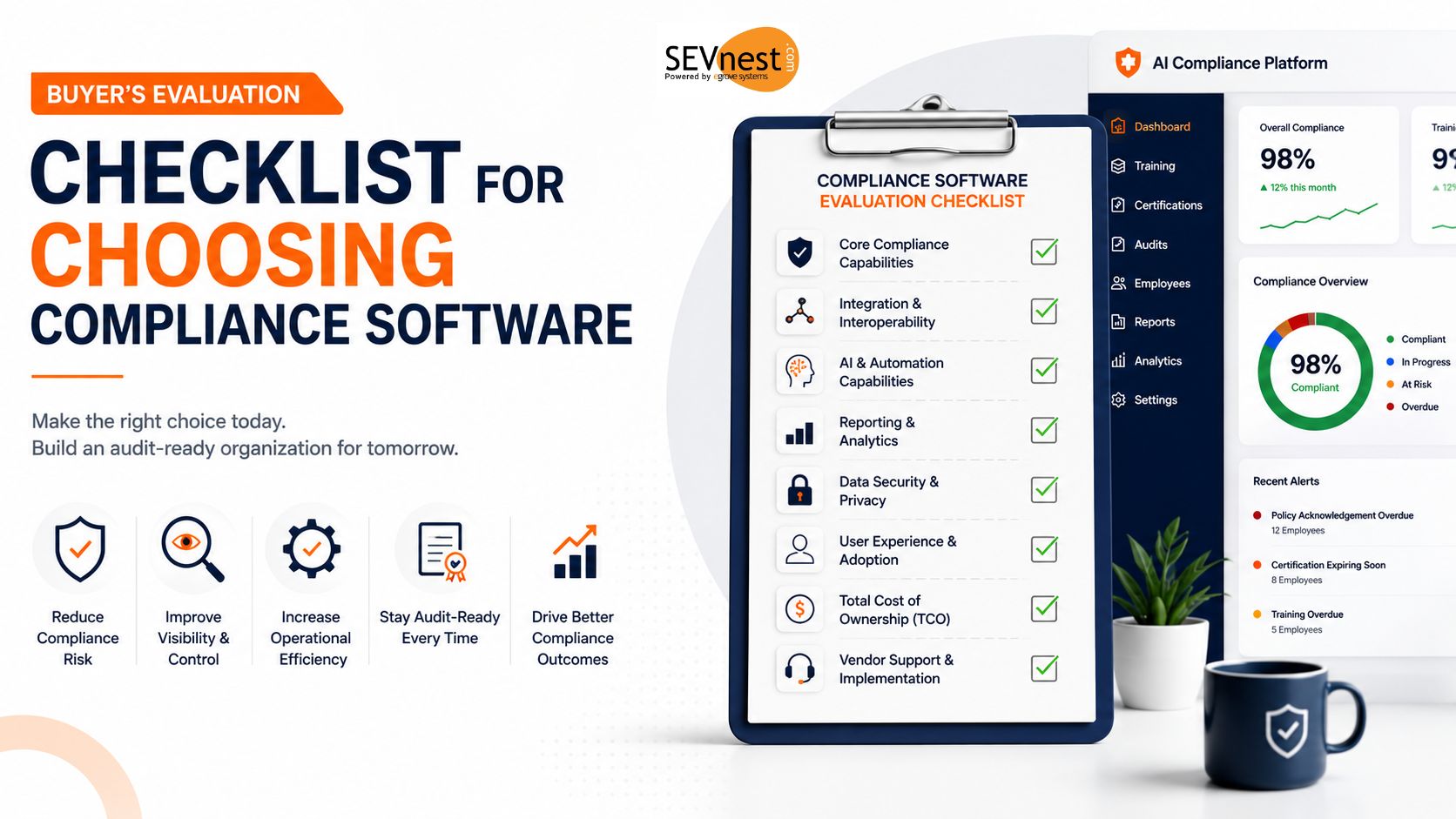
Before selecting compliance technology, decision-makers should evaluate:
1. Implementation Process
Ask:
- How quickly can the platform be deployed?
- Does it support enterprise requirements?
- Is migration assistance available?
2. AI Capabilities
Evaluate:
- Automated workflows
- Intelligent recommendations
- Compliance insights
- Risk identification
3. Reporting and Analytics
Look for:
- Custom dashboards
- Audit reporting
- Real-time visibility
- Workforce analytics
4. Integration Options
Consider whether the platform connects with:
- HR systems
- Existing learning tools
- Identity platforms
- Business applications
5. User Experience
Employees should have an easy experience accessing:
- Training
- Certifications
- Compliance activities
6. Total Cost of Ownership
Evaluate:
- Software costs
- Administration effort
- Maintenance requirements
- Scalability
Questions to Ask Before Choosing a Compliance Platform
Before investing in a compliance platform, organizations should ask:
- Can the platform replace multiple compliance tools?
- Does it support automated compliance workflows?
- How does it improve employee training management?
- Can it provide real-time compliance reporting?
- Does it support role-based learning?
- How does AI improve compliance operations?
- Can the platform scale as the organization grows?
- Does it improve audit readiness?
Why Enterprises Prefer Unified AI Compliance Platforms
Enterprises are moving toward integrated compliance ecosystems because they need simplicity, visibility, and automation.
A unified platform helps organizations:
- Reduce technology complexity
- Improve workforce learning
- Automate compliance processes
- Strengthen reporting
- Increase accountability
The future of compliance is moving away from managing separate systems and toward intelligent platforms that connect the entire compliance workflow.
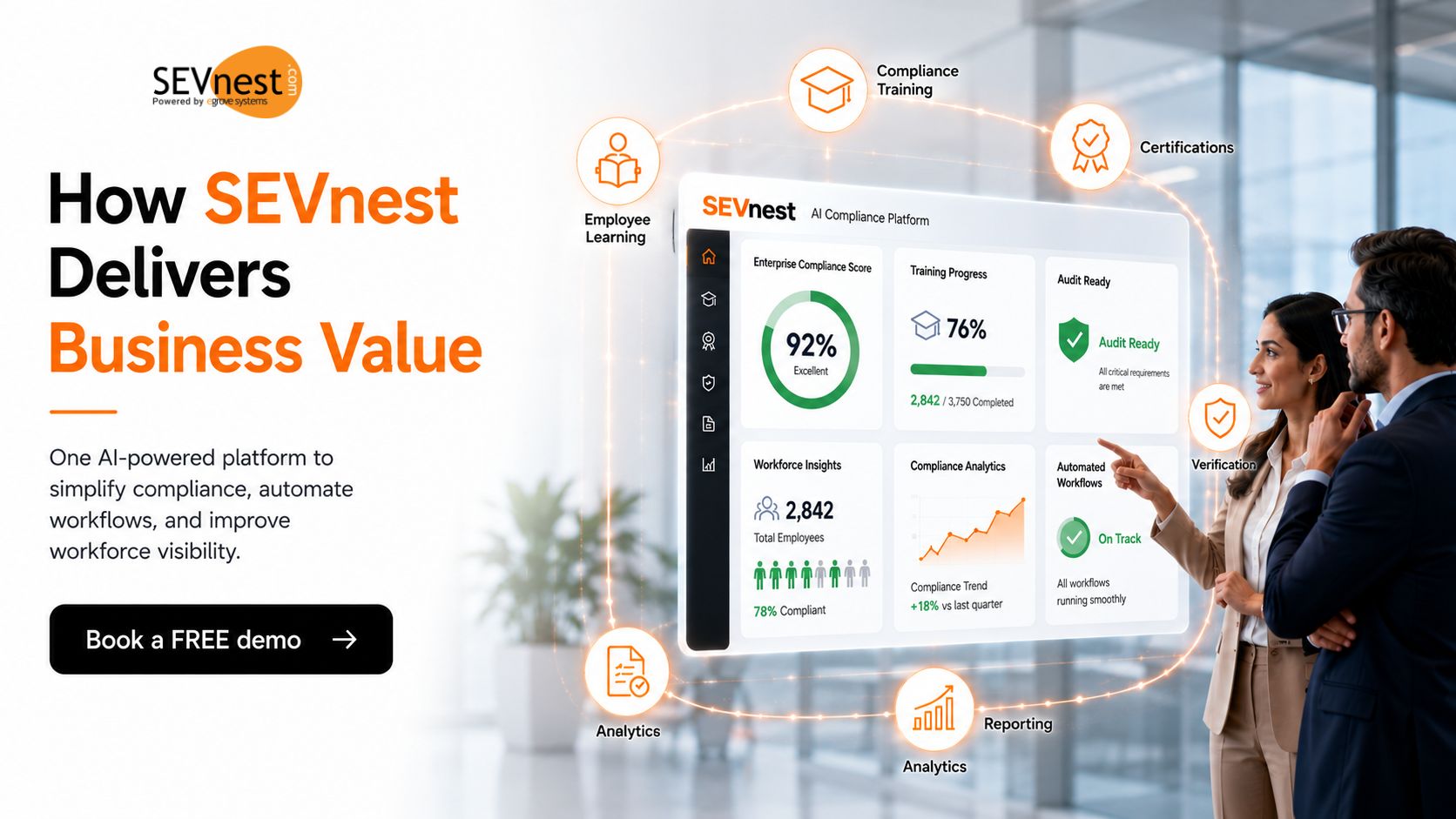
How SEVnest Delivers Business Value
SEVnest Blog Banners (Best AI Compliance Management Platform) 3
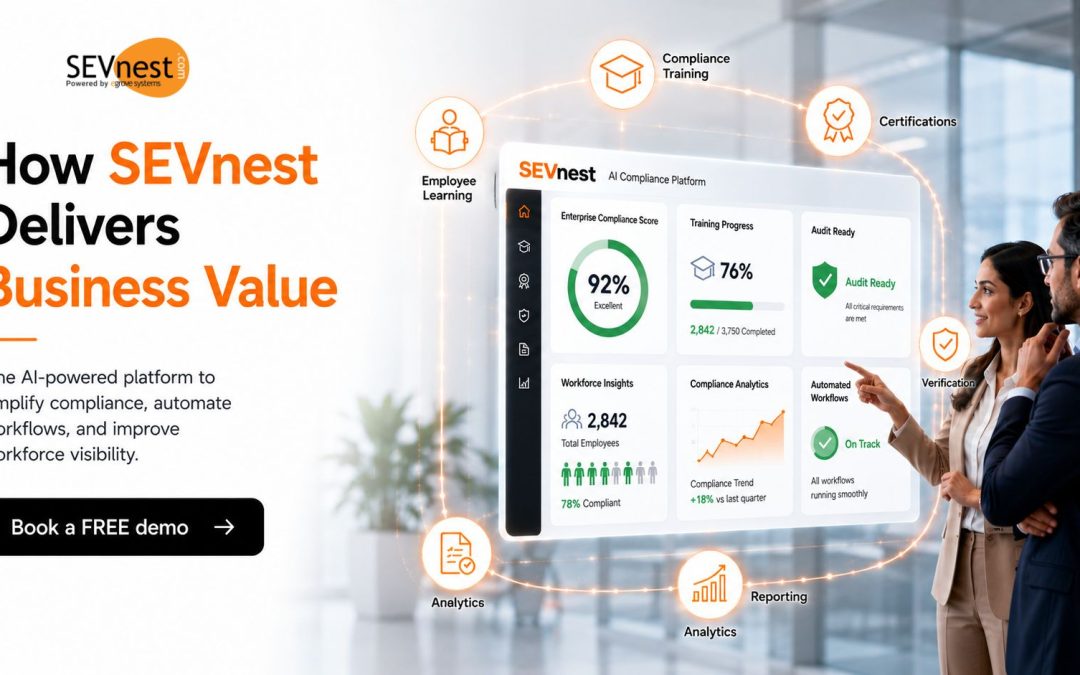
SEVnest helps organizations simplify compliance operations by bringing essential workforce learning and compliance processes into one AI-powered platform.
The platform helps businesses manage:
- Compliance training
- Employee learning workflows
- Progress tracking
- Compliance verification
- Reporting
- Workforce insights
Instead of managing separate compliance tools, organizations can centralize their processes and improve visibility across their workforce.
SEVnest supports modern compliance teams by helping them automate workflows, simplify reporting, and create a more connected compliance management approach.
Key Takeaways
- Multiple compliance tools can create complexity and visibility challenges.
- Organizations are moving toward centralized compliance platforms.
- AI improves automation, reporting, and workforce insights.
- The right platform should support training, tracking, verification, and reporting.
- Unified compliance technology helps organizations improve audit readiness.
Final Thoughts
Compliance teams today need more than a collection of disconnected tools. They need a centralized approach that improves visibility, reduces administrative effort, and supports continuous workforce readiness.
An enterprise compliance platform helps organizations bring together learning, compliance tracking, automation, reporting, and analytics into one intelligent ecosystem.
As compliance requirements continue to evolve, enterprises that simplify their compliance technology strategy will be better positioned to manage risk and improve operational efficiency.
To explore how SEVnest can help modernize your compliance operations, request a platform walkthrough today.