
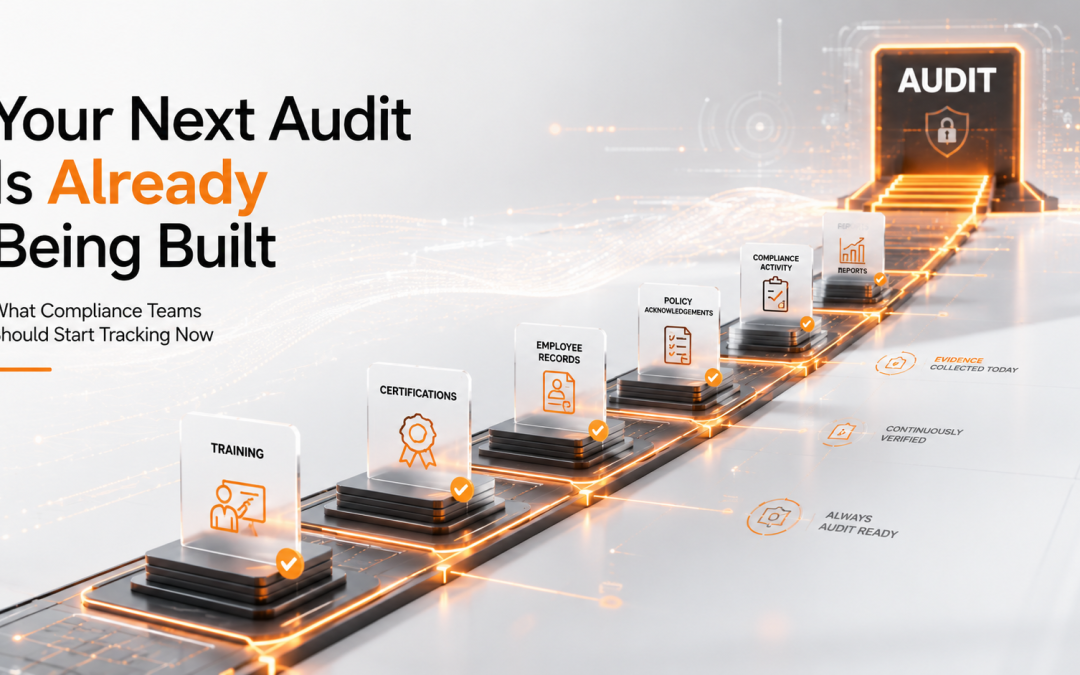
The next audit may already be underway, even if the audit date has not been announced.
Every day, organizations create compliance evidence through employee training, certifications, policy acknowledgements, onboarding activities, assessments, and documentation. These activities build the foundation that supports future audit readiness.
However, many organizations still approach audits as a last-minute project.
Teams begin searching for records, reviewing spreadsheets, requesting employee updates, and collecting documentation only after an audit request arrives. This reactive approach can create unnecessary pressure and make it difficult to understand the organization’s true compliance position.
Strong Audit Readiness is not created during an audit. It is built continuously through the systems, processes, and records maintained throughout the year.
For compliance teams, the goal is not simply preparing documents. The goal is maintaining ongoing visibility into workforce compliance.
What Does “Your Next Audit Is Already Being Built” Mean?
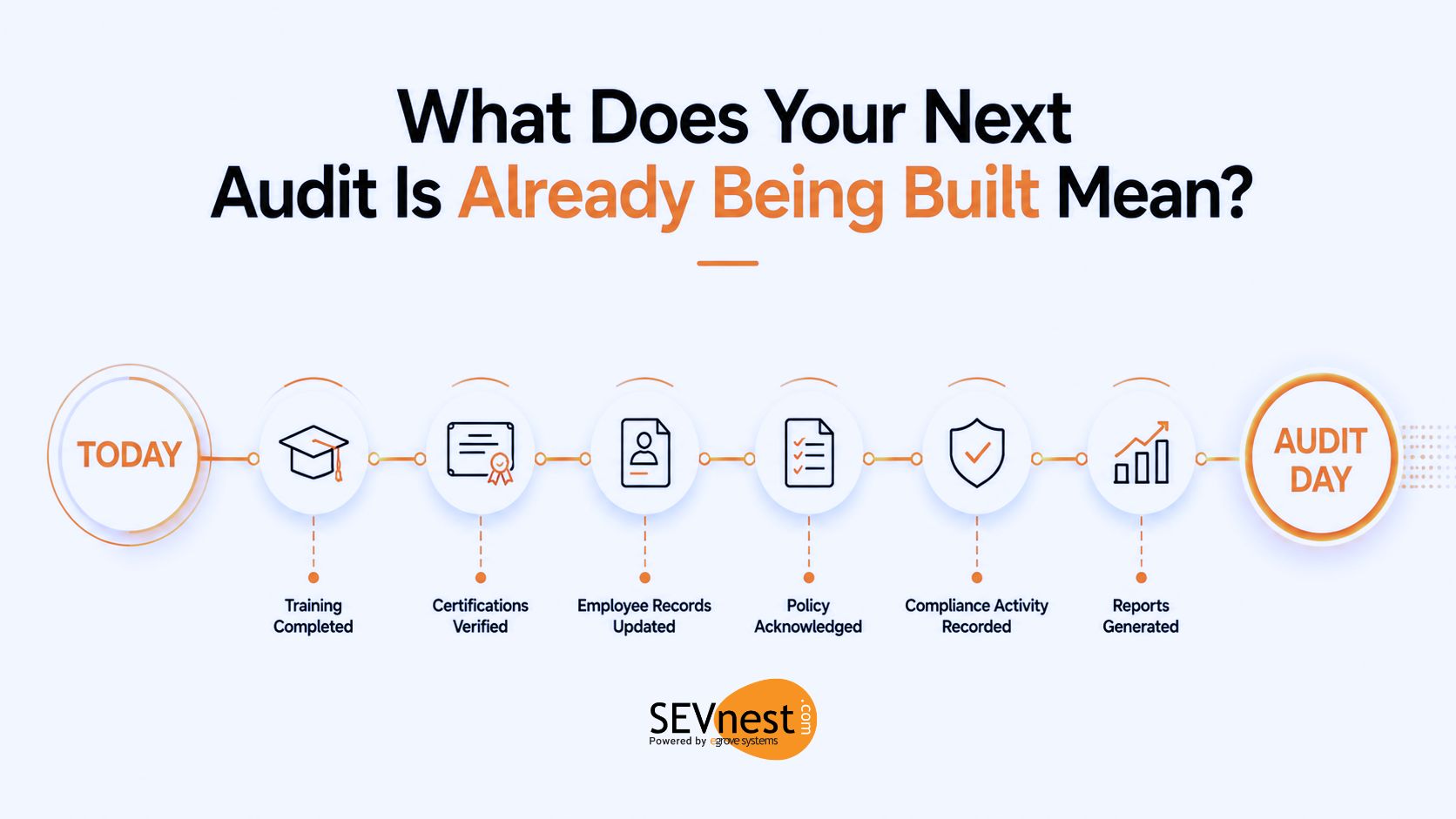
An audit does not only evaluate what an organization does on the day of review. It often requires evidence that compliance activities have been managed consistently over time.
For example, an employee completing mandatory training today creates a record that may become part of future compliance evidence.
Similarly:
- A completed assessment demonstrates learning activity
- A certification record demonstrates qualification tracking
- A policy acknowledgement demonstrates employee awareness
- A corrective action record demonstrates issue management
Each activity contributes to an organization’s compliance history.
This is why audit-ready compliance depends on consistent tracking rather than last-minute preparation.
Organizations that maintain compliance visibility throughout the year are better positioned to respond when evidence is requested.
Why Audit Preparation Often Becomes a Last-Minute Problem
Many organizations struggle with audits not because compliance activities are missing, but because the information is difficult to organize.
Common challenges include:
Scattered Compliance Records
Compliance information may exist across multiple locations:
- Learning systems
- Shared folders
- Spreadsheets
- Email communications
- Employee records
When information is scattered, teams spend more time searching for evidence.
Spreadsheet-Based Tracking
Spreadsheets can help manage small processes, but they become difficult to maintain as organizations grow.
Common challenges include:
- Manual updates
- Version confusion
- Missing information
- Limited visibility
As workforce requirements increase, organizations often need stronger Compliance tracking processes.
Missing Training Visibility
Employee training is a major part of compliance management.
However, organizations may struggle to answer:
- Who completed required training?
- Which employees are overdue?
- Which departments need attention?
- Are assessments completed?
Without consistent Employee compliance training records, demonstrating workforce readiness becomes more difficult.
Manual Follow-Ups
Compliance teams often spend significant time reminding employees about incomplete requirements.
Examples include:
- Overdue training
- Expiring certifications
- Missing acknowledgements
Manual follow-ups increase administrative workload and make compliance management less efficient.
What Compliance Teams Should Start Tracking Now
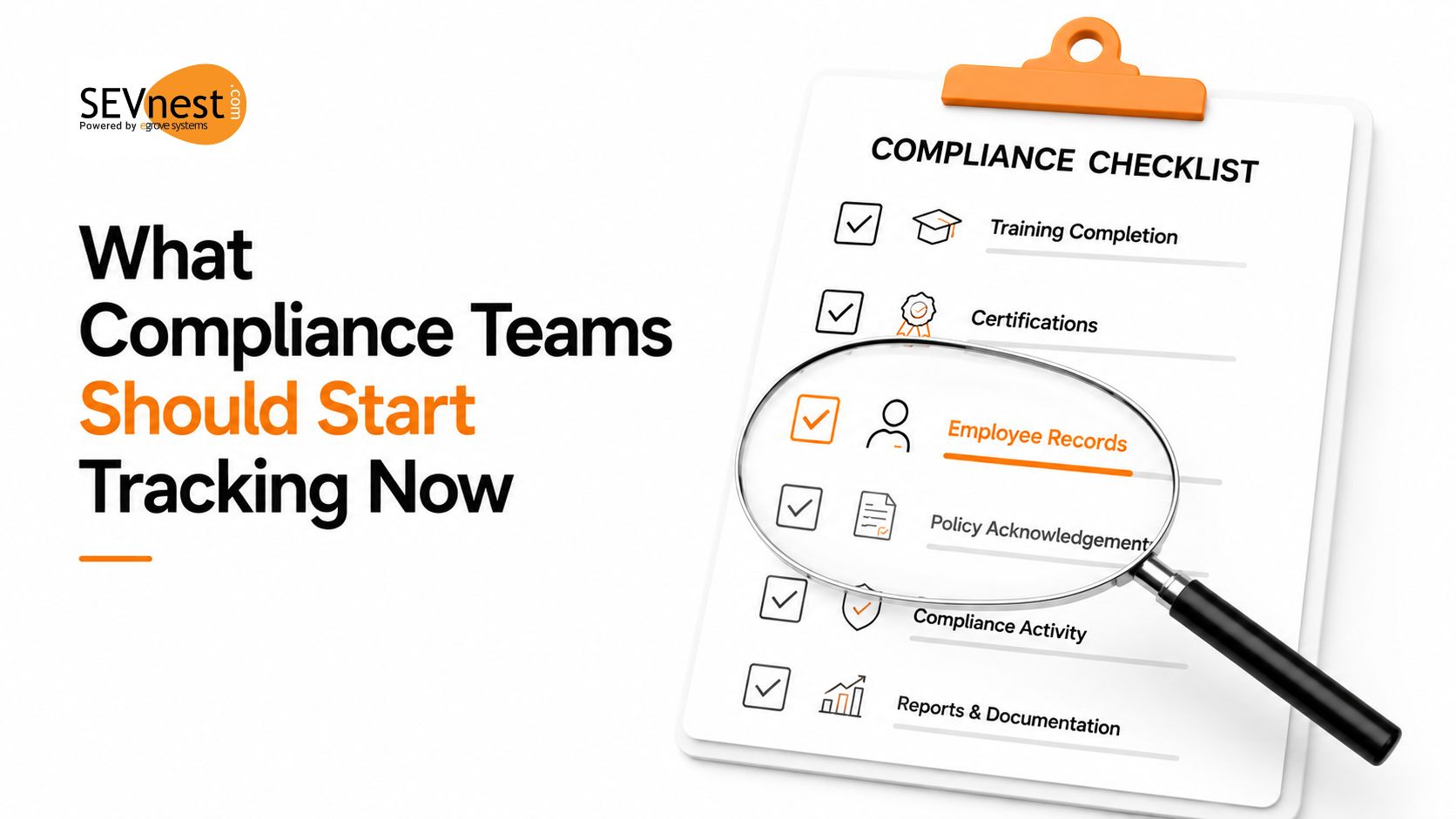
Building strong Audit Readiness requires monitoring the activities that create compliance evidence.
1. Employee Training Records
Training records provide visibility into employee learning activities.
Organizations should track:
- Required training assignments
- Completion status
- Completion dates
- Assessment results
- Overdue learning activities
Consistent Employee compliance training tracking helps organizations understand whether workforce learning requirements are being addressed.
2. Certifications and Renewal Dates
Certifications often require ongoing monitoring.
Compliance teams should maintain visibility into:
- Current certifications
- Expiration dates
- Renewal requirements
- Employee qualification status
Tracking certification information helps organizations avoid unexpected gaps.
3. Policy Acknowledgements
Policies are only effective when employees understand and acknowledge them.
Organizations should maintain records of:
- Policy distribution
- Employee acknowledgements
- Required confirmations
- Updated policy reviews
These records help demonstrate employee awareness.
4. Employee Onboarding Compliance
Compliance begins when employees join the organization.
Teams should track onboarding requirements such as:
- Initial training
- Required acknowledgements
- Role-specific learning
- Compliance activities
A structured onboarding process creates stronger workforce readiness from the beginning.
5. Compliance Gaps and Corrective Actions
Identifying gaps is only the first step.
Organizations should also track:
- Identified issues
- Corrective actions
- Follow-up activities
- Completion status
This creates a documented approach to improving compliance processes.
6. Compliance Documentation and Reporting
Organized documentation makes audit preparation more efficient.
Important records may include:
- Training reports
- Completion records
- Certifications
- Assessments
- Compliance reviews
Effective Compliance documentation practices help teams access information when needed.
The Hidden Value of Continuous Compliance Tracking
Continuous compliance management provides benefits beyond audits.
Better Visibility
Teams gain a clearer understanding of workforce compliance status.
Faster Issue Identification
Potential gaps can be identified earlier instead of during audit preparation.
Improved Accountability
Employees and managers have clearer awareness of compliance responsibilities.
More Consistent Training
Organizations can maintain structured learning processes across teams.
Better Decision-Making
Leaders can use compliance information to make more informed operational decisions.
Audit readiness becomes a natural outcome of strong compliance management practices.
Reactive vs. Continuous Audit Readiness
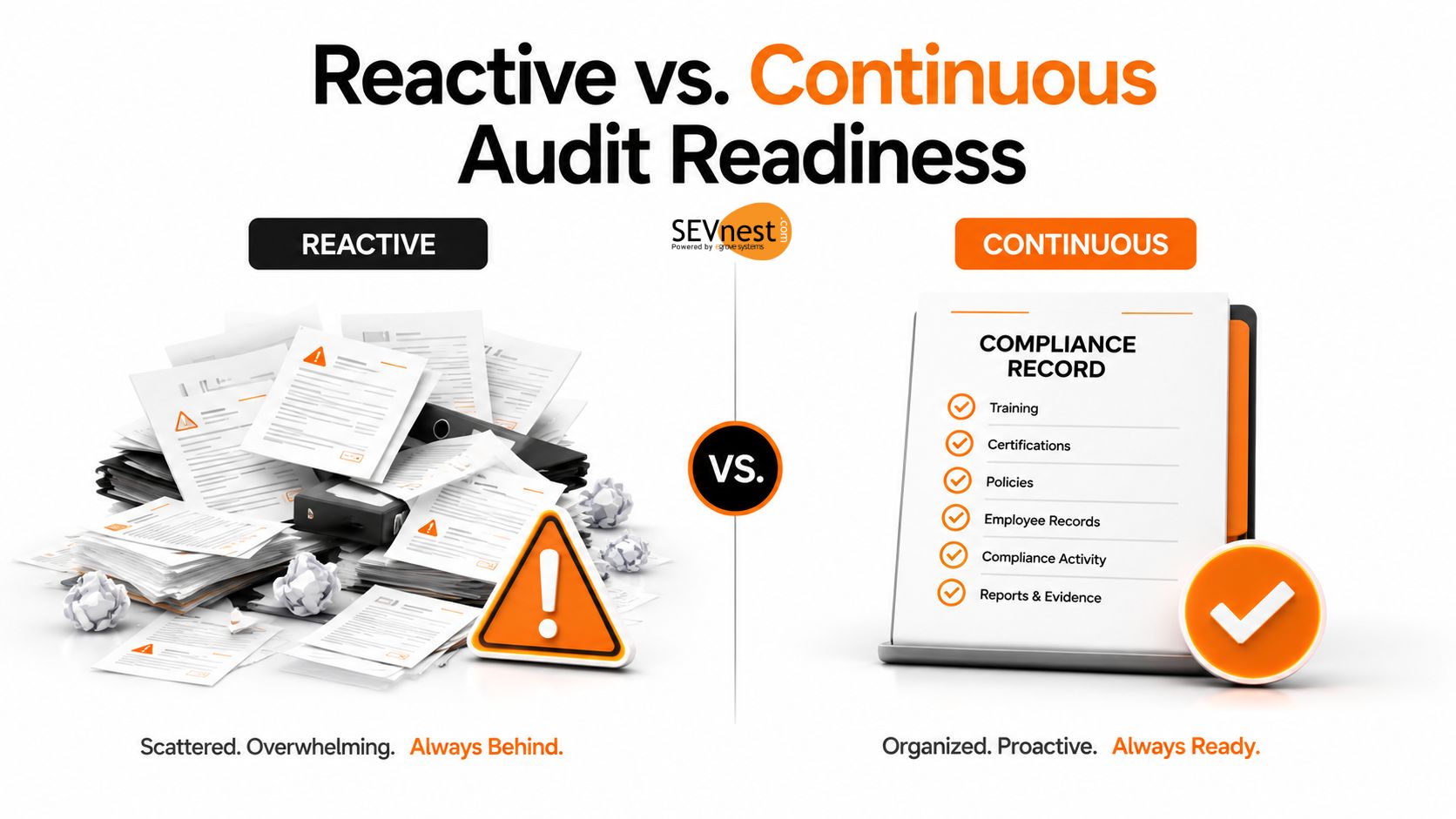
Reactive Approach
Organizations prepare only when an audit is announced.
Challenges:
- Searching for missing records
- Requesting employee updates
- Rebuilding reports
- Managing deadlines under pressure
Continuous Approach
Organizations maintain readiness throughout the year.
Benefits:
- Regular compliance tracking
- Organized documentation
- Better workforce visibility
- Easier reporting
- Faster response
Continuous readiness creates a more sustainable compliance approach.
How Technology Supports Audit Readiness
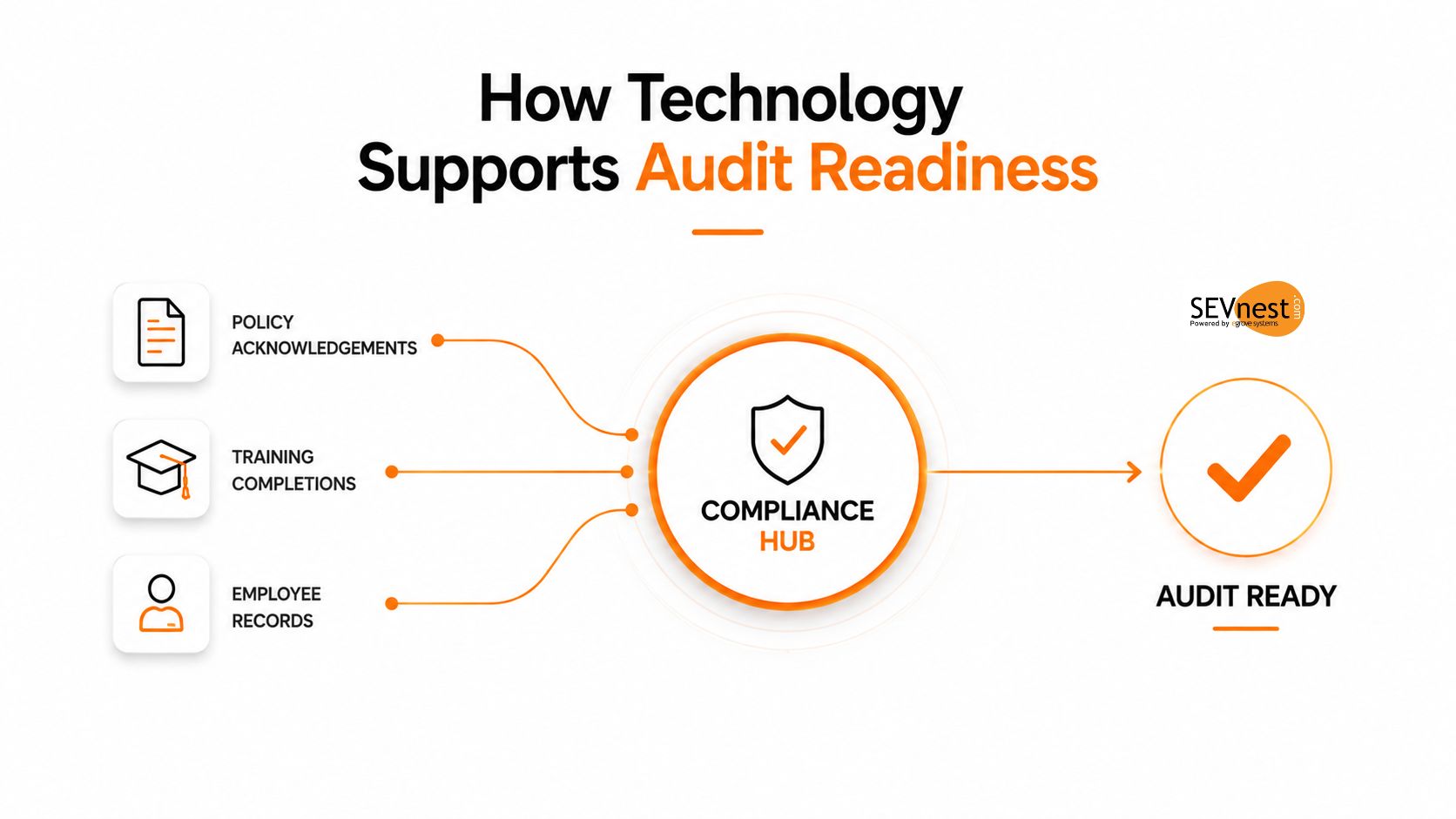
Modern compliance technology helps organizations organize and manage compliance activities more effectively.
A centralized platform can support:
- Training management
- Compliance tracking
- Automated reminders
- Documentation organization
- Reporting
- Workforce visibility
AI capabilities can further support compliance teams by helping:
- Identify potential gaps
- Recommend relevant learning
- Highlight overdue activities
- Automate repetitive workflows
- Provide useful insights
Technology does not replace compliance professionals. Instead, it helps teams manage information more efficiently.
How SEVnest Supports Continuous Compliance Readiness
SEVnest helps organizations create a more structured approach to workforce compliance management.
The platform supports areas such as:
- Compliance training
- Workforce learning
- Employee onboarding
- Learning progress visibility
- Compliance tracking
- Certifications
- Automated workflows
- Reporting
- AI-powered learning capabilities
When compliance activities are managed continuously in one environment, maintaining audit readiness becomes part of the everyday workflow rather than a last-minute project.
SEVnest helps organizations improve visibility into workforce learning and compliance activities through a centralized approach.
Key Takeaways
- Audit readiness is built continuously, not during the audit period.
- Every training record, certification, and compliance activity creates valuable evidence.
- Fragmented records make audits more difficult to manage.
- Continuous compliance tracking improves visibility and decision-making.
- Technology can help organizations maintain organized compliance processes.
Final Thoughts
Your next audit is already being built today.
Every employee trained, every certification tracked, every policy acknowledgement collected, and every compliance record maintained contributes to future audit evidence.
Organizations that wait until an audit arrives may face unnecessary pressure and uncertainty.
A stronger approach is continuous compliance management, where training, documentation, tracking, and workforce readiness are maintained as part of everyday operations.
Explore how SEVnest can help your team build a more organized and continuously visible approach to workforce compliance.
Information Box: Building Blocks of Audit Readiness
Compliance Area |
What Organizations Should Track |
| Employee Training | Training assignments, completion status, assessments, and learning progress |
| Certifications | Certification status, renewal dates, and employee qualifications |
| Policy Awareness | Policy acknowledgements and employee confirmations |
| Compliance Tracking | Workforce compliance status and outstanding requirements |
| Compliance Documentation | Records, reports, and evidence needed for review |
| Audit Preparation | Organized information for faster audit response |